
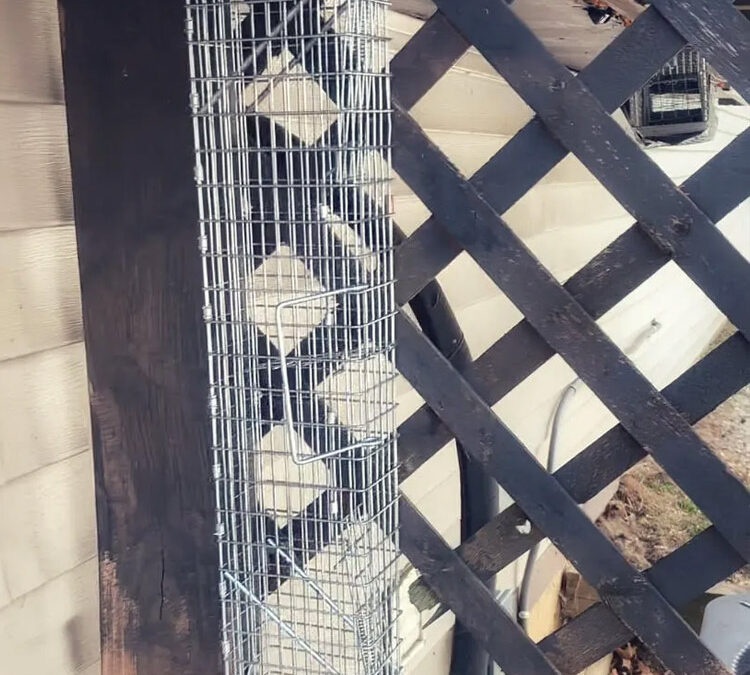
When it comes to trapping a critter I can’t help but to hear my grandfathers voice ring in my head- “give yourself every advantage”. Trapping a critter can logically be approached with a mindset of underestimating your opponents. That approach usually leads to checking empty traps and feelings of frustration as you continue to witness your critter scratching or damaging your property. The most common mistakes are usually simple to avoid. The focus will be on live cage traps and three common mistakes.
When handling traps one of the first mistakes we see are people using bare hands to place the trap and set the bait inside. It’s important to understand that most critters have a keen sense of smell and can be wary of human scent. Using latex gloves while handling any part of the trapping process is a must in giving yourself the advantage.
Picking the location of where to place the trap should be done in a strategic manner. Animals namely raccoons and opossums are creatures of habit. They are known to travel the same route when on the move. After identifying their route placing the trap in close proximity to their path is good practice.
Once the location is set camouflaging the trap with its environment can help make the cage look less suspicious. Nothing overboard here, simply place some sticks and/or stones atop and around the trap to make it look less obvious to the critter. If baiting with peanut butter or cat food smearing some on top or around the trap will also make the trap look less obvious. Make sure to place the camouflage in such a way that the mechanisms of the trap are not interfered with.
Planning your set, being organized and not underestimating the critter are tried and true practices. Following these tips will help yield more success in removing your critter and less frustration from empty traps.