
Bats catch a bad reputation around the globe. They are feared by many and are understandably unwelcome into most peoples homes. Off the silver screen, bats are key players in keeping ecosystems balanced and act as natures natural pest control. Bats are so crucial to the balance of our ecosystems that certain bat species are federally protected in North America.
How can bats be evicted from a structure permanently without harming their well being?
Bats are able to squeeze into some pretty tight spaces. Similar to rats and mice, if their head can fit the rest of the body will follow. To put that into perspective bats can enter any opening roughly 3/8” (size of a dime) of larger. Although bats are able to squeeze into tight areas they’re unable to climb smooth surfaces especially at an incline. These characteristics are of particular interest when executing a successful bat eviction.
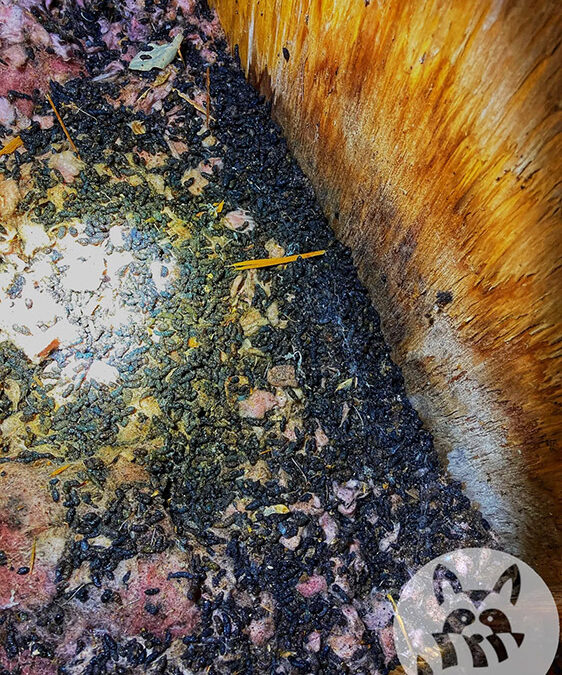
To make math easy lets say there are 10 cavities around a structure that are large enough for bats to get in and out of. Typically bats will utilize one or two of those cavities at any point. The cavities they utilize for entry will usually have bat feces (guano) and black stains around the entry hole. The black stains are leave behinds from the grease and oils of their body as they squeeze into the hole.
The cavities with high activity will be fitted with “one-way valves”. These valves allow bats to exit out but not return through. This occurs because one-way valves have smooth interior linings that bats cannot gain traction on. The valves will also be placed at a declining angle to eliminate the opportunity for re-entry. To ensure the bats are flushed and excluded from the property successfully all other potential entry points must also be sealed.
With the one-way valves installed and all other entry points secured the bats will have no opportunity to re enter the structure after they exit. The bats will naturally exit the structure to get food and water. There are other considerations that must be factored in for a successful and safe bat eviction.
To ensure there are no bats left behind valves should be left installed for 3-5 days. The outside temperature must be over a certain degree (region dependent) and accomplished when there are no pups (baby bats) present. If the exterior temperature is too cold the bats will not exit the structure. If there are nursing pups and their mothers exit the one-way valves with no way to re-enter the pups will die.
A successful bat flush requires more than installation of one-way valves. All other potential entry/exit points must be simultaneously sealed, the outside temperature must be over a certain degree (region dependent), and the presence of baby bats needs to be verified. In addition, each state will also have months during the year when bats cannot be evicted. This ensures babies are not separated from their mothers. This also ensures evicted bats are not put out into exterior temperatures that could kill them.
For more information on bat eviction contact the wildlife professionals at Critter Evictors.