
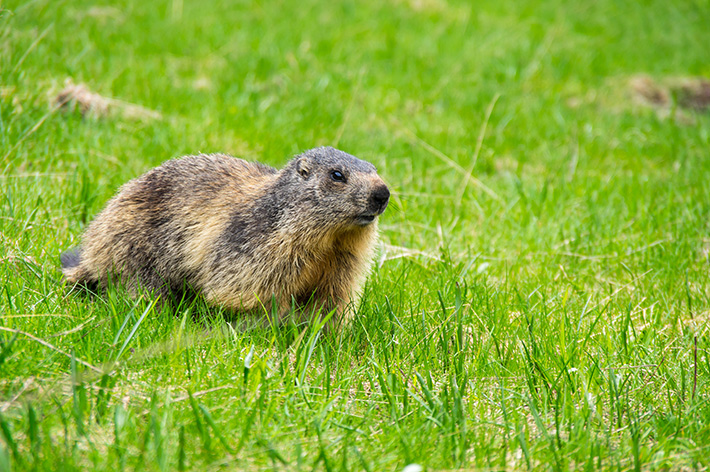
The groundhog has achieved a bit of an exalted status with communities across the United States celebrating Groundhog Day on February 2 and conferring on groundhogs the ability to predict the arrival of spring.
The damage groundhogs can do to your property does not match its appearance.
What Do They Look Like?
Groundhogs are cute, with brownish gray fur covering their chunky bodies. But it doesn’t mean you want them living on your property. They have short tails and legs, with their total head and body area being about 16 to 20 inches.1 Their weight can fluctuate between about five and thirteen pounds depending on the time of the year, as groundhogs eat voraciously during the summer in order to survive when hibernating in the winter.
Where Do They Live?
Groundhogs live in burrows underground and can ruin residential landscapes as well as foundations. Consuming vegetation and burrowing are two major reasons why homeowners often see groundhogs as unwanted pests.
The groundhog emerges from its winter hibernation in early spring. It’s hungry and instinctively it knows that it has to store as much fat as possible during the summer months to get it through four or more months of hibernation when it is not eating at all.
What Do They Eat?
Part of the squirrel family, groundhogs are herbivores, eating vegetables during daylight hours, especially in the early morning. They prefer alfalfa, clover, peas, beans, lettuce, broccoli, plantain, soybeans and basically any flowers or vegetables, including seedlings that sprout in the spring.2 They eat in volume, taking in about a pound to a pound and one half of vegetation daily.3
Trouble for Your Home and Garden
If you have a garden of any kind and notice that it is slowly disappearing, with piles of dirt nearby, it’s probably a groundhog. They can destroy your lawn and everything in your garden as well as create a slew of problems underground leading to structural damage to your home’s foundation.
Moisture from water pooling in their underground tunnels leads to humidity and mold. Your home’s pipes, cables and wires are also at risk. And don’t be surprised if you find other critters and pests seeking shelter in their burrows.
Groundhog Behavior
When threatened, a groundhog will retreat to a burrow it has created. They also sleep, hibernate and raise their babies in their burrows, Groundhog burrows are “intricate, multifaceted homes built for survival and comfort.”4
Like homes they have specific rooms including a main room, a nursery for their young, a bathroom and multiple entrances/exits. Openings to tunnels are about six inches in diameter as are the tunnels and you often see mounds of dirt at the entrance to a groundhog tunnel. Entrances and exits can range from a foot to 20 feet apart.
Structural Damage
Burrows are often located along a creek or pasture or in a wooded, bushy area. Unfortunately, groundhogs also live in residential settings, where food from gardens and other landscaping is plentiful. Burrow entrances can be found at the base of home foundations and under sidewalks and tunnels can spread across lawns and gardens, creating uneven and unsafe ground.
Overlooked Benefits
Groundhogs, also called woodchucks or marmots, like most mammals, do serve a vital purpose in the ecosystem. Groundhogs are “nature’s own tillers and aereators.”5 While building their burrows, they break up compacted soil, pushing deep soil upwards and surface soil downwards and infusing the soil with air (a process called aeration).
Aeration allows the soil to drain better and to receive vital nutrients. Abandoned groundhog burrows become homes to other animals, such as foxes, rabbits, skunks, weasels, opossums and snakes and help foster biodiversity.6 Having a groundhog inhabit your property is actually a good sign. It “signals the vitality and balance of the immediate ecosystem … serving as a testament to a functional and potentially thriving habitat.”7
Safe, Humane Groundhog Removal -Critter Evictors
The many benefits these creatures can provide are the main reasons for engaging a professional wildlife removal specialist to relocate a groundhog on your property. Critter Evictors in Scottsdale are knowledgeable about state and local laws and possess the necessary permits and knowledge to safely identify, trap, remove and relocate groundhogs.
Our wildlife removal services are available throughout Maricopa County. Contact us for a no-obligation inspection, removal plan and prevention for future wildlife invasions.
__________________
1 Groundhogs
Link: https://www.pestworld.org/pest-guide/nuisance-wildlife/groundhogs/
2, 3 How To Get Rid of Groundhogs (a.k.a. Woodchucks) by Catherine Boeckmann, 5/30/2025
Link: https://www.almanac.com/pest/groundhogs
4 Groundhog Burrows: Everything You Ever Wanted to Know!, 5/13/2023
Link: https://www.squirrelsatthefeeder.com/groundhog-burrows-everything-you-ever-wanted-to-know/
5, 6 ,7 Groundhog in Your Yard? The 7 Pros & Cons You Must know Now, 8/27/2025
Link: https://howspruce.blog/groundhog-yard-7-pros-cons-know