
Most people don’t think about how wildlife actually gets into their home until they hear something crawling around in the walls or ceiling. The truth is, animals aren’t just wandering in through obvious openings. More often, they’re finding small, easy-to-miss weak spots around your home and using them to get inside.
What makes it tricky is that a lot of these entry points aren’t visible from the ground or during a quick walkaround. By the time you notice a problem, something has already settled in.
What are the most common hidden entry points wildlife use to get into homes?
Wildlife usually gets in through less obvious areas, such as roofline gaps, attic vents, loose soffits, uncapped chimneys, crawl space openings, or small cracks around pipes and foundations. These spots are easy to overlook but give animals exactly what they need to get inside.
Some animals only need a tiny gap to squeeze through, while others will actually pull apart weak materials to make their own opening. Knowing where to look and what to look for can make a big difference.
From Roof to Foundation: Where Animals Are Getting into Your Home
Roofline and Attic Vulnerabilities
The roof is one of the biggest problem areas, mostly because people don’t check it often. A loose shingle, a small gap along the edge, or a damaged soffit can be enough for squirrels or raccoons to get in. Once they’re inside the attic, they usually stay hidden for a while.
Attic vents are another common issue. If the cover is weak or cracked, it doesn’t take much for an animal to push through it.
Chimneys and Vent Openings
Chimneys are a classic entry point, especially if there’s no cap on top. Birds, raccoons, and even squirrels will use them as a place to nest.
The same goes for dryer vents and bathroom exhaust vents. If those covers are broken or loose, they can turn into easy access points without you realizing it.
Foundation Cracks and Utility Gaps
Down at ground level, even small openings can be a problem. Gaps around pipes, wiring, or the foundation might not look like much, but they’re more than enough for mice and other small pests.
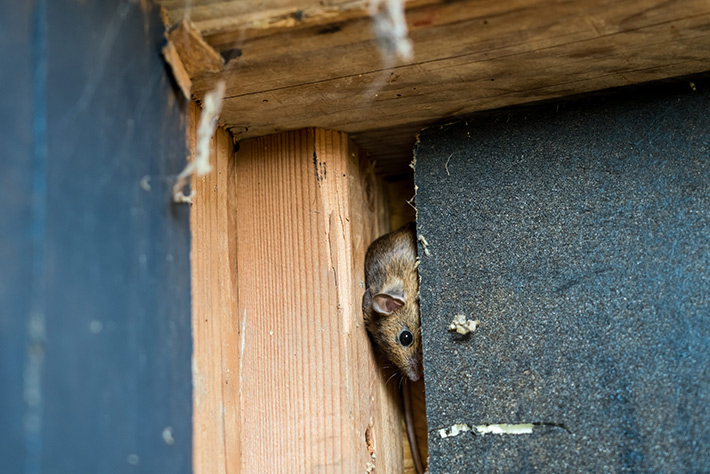
Mice, in particular, don’t need much space at all. If they can get their head through, the rest of their body usually follows.
Crawl Spaces and Basement Access
Crawl spaces tend to get ignored, which is exactly why animals like them. Open or damaged vents, loose panels, or poorly sealed windows can let in things like skunks, opossums, or rodents.
Because these areas aren’t checked often, animals can stay there for a long time without being noticed.
Garage and Doorway Gaps
Even something as simple as worn weather stripping can create an entry point. If your garage door doesn’t fully seal, pests can get in and eventually make their way into the house.
It’s not always a big opening; sometimes it’s just enough space for something small to slip through.
Tips to Prevent Wildlife Entry
● Take a closer look at your roofline and vents a few times a year
● Add chimney caps and make sure vent covers are secure
● Seal up small cracks around the foundation and utility lines
● Replace old or worn weather stripping on doors and garages
● Trim back branches that hang too close to your roof
● Keep an eye out after storms, since damage can create new openings
Why Professional Wildlife Removal Matters
It’s one thing to spot a gap; it’s another to find every possible entry point. That’s where professional wildlife removal services come in.
They don’t just remove the animal you’re dealing with. They also check the entire home, figure out how it got in, and help make sure it doesn’t happen again. That kind of full inspection is hard to do on your own, especially with areas like roofs or crawl spaces.
There’s also the safety aspect. Handling wildlife or sealing entry points without knowing what’s inside can make the situation worse.
Related Questions
How small a hole can a mouse fit through?
A mouse can fit through a hole about the size of a dime, which is why even tiny gaps matter.
What animals usually get into attics?
Squirrels, raccoons, rats, bats, and birds are some of the most common.
What are the signs that something is in my home?
Scratching sounds, droppings, bad smells, or visible damage are all common signs.
Can I block entry points myself?
You can handle small fixes, but it’s important to make sure nothing is trapped inside before sealing anything up.
How often should I check for entry points?
Twice a year is a good baseline, plus any time after strong storms or visible damage.
Protect Your Arizona Property with Trusted Wildlife Removal Services
A lot of wildlife issues start with something minor that is easy to miss. Taking the time to check your property and bringing in a professional when needed can help prevent a much bigger problem later on.
Critter Evictors provides safe, reliable wildlife removal services in Scottsdale and throughout the surrounding Arizona communities. Our team helps identify entry points, remove unwanted wildlife, and provide practical solutions to help keep critters from coming back.
Call today to schedule a Free Inspection and Estimate.