
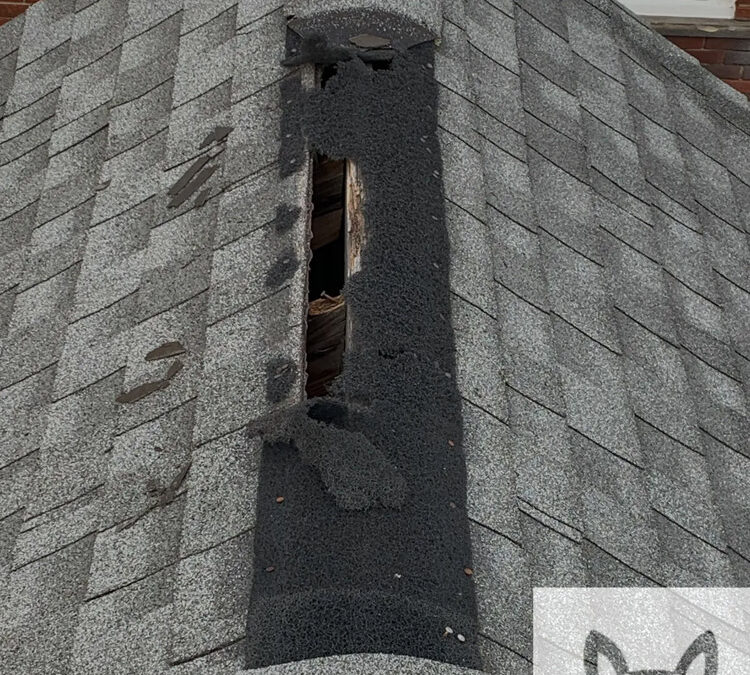
When it comes to installing a roof, proper ventilation is a must. Roofs must be able to breath. Cool air usually travels into the attic through openings in the soffit (the overhangs of the house), which pushes hot air and moisture out through vents on top of the roof. A common exhaust vent for roofs nowadays is called a ridge vent. Ridge vents are at the peak of the roof and allow for heat and vapor to escape the attic. Ridge vents are also a common area for critters to access your home.
When a roof is breathing properly and warm air is being pushed out through the exhaust vents, critters can be drawn to that warmth. Raccoons, squirrels, bats & mice, to name a few can utilize ridge vents to gain entry. When the critters arrive at the peak of the roof and feel the exhaust venting they commonly take advantage of the opportunity for shelter. Some critters like mice and bats will simply squeeze their way into the attic though the ridge vent while raccoons generally take a more aggressive approach and tear parts of the ridge vent off to enter. The question becomes “how can we allow for our roof to breath properly but deter critters from entry”? This issue has become so common that products now exist to allow the roof to breath but exclude critters.
When critters peel the ridge open or squeeze in they usually begin by picking at the sides of the ridge vent. Protection for your ridge aims to protect and lock down the sides. Strips of breathable metal meshing can be installed along the sides of the ridge vent to add a barrier against invasive critters. Mice and bats are excluded by the metal meshing while raccoons have a more difficult time lifting the ridge vent.
Ridge vent exhausts are becoming standard practice in roofing and do an exceptional job in allowing the roof to breath. Critters are highly adaptive and fast learners. They can take advantage of the ridge vents design and utilize them to gain entry. If you have a newer roof with a ridge vent and are experiencing critters in the attic, the ridge vent must be inspected as common practice to ensure it’s secured and not allowing for critter entry. Luckily humans are adaptive as well and have created products to allow for proper ventilation and exclusion of wildlife.