
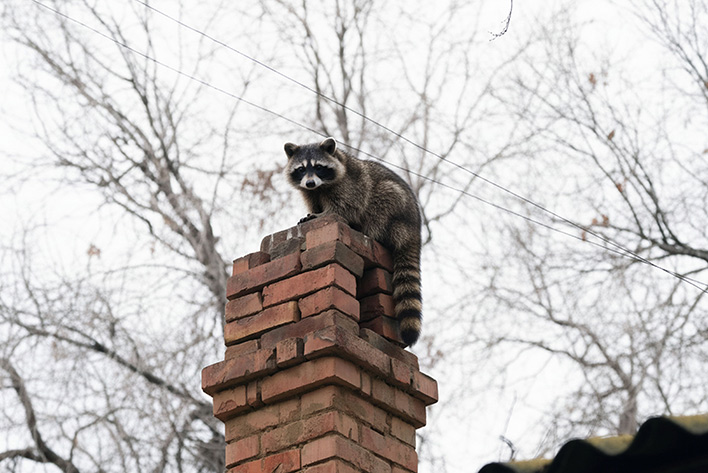
When you hear scratching or thumping coming from your chimney in the middle of the night, your mind might jump to all kinds of conclusions. Maybe it’s the wind. Maybe it’s tree branches. Santa? It couldn’t be. The truth is usually much less magical. There’s a good chance a raccoon has decided your chimney is the perfect place to call home.
As strange as it sounds, chimneys are one of a raccoon’s favorite nesting spots,
especially for mothers looking for a safe place to raise their babies. What feels like an unexpected houseguest to you looks like the perfect cozy home to them.
Why do raccoons nest in chimneys? Raccoons are attracted to chimneys because they closely resemble hollow trees, one of their natural nesting habitats. Chimneys provide warmth, protection from predators, and a quiet place to raise their young. If left alone, raccoons can cause property damage and create health and safety concerns for your family.
Before you grab a flashlight and start investigating, here’s what you should know.
Why Are Chimneys So Attractive to Raccoons?
To a raccoon, your chimney looks surprisingly similar to a hollow tree. In the wild, female raccoons naturally seek enclosed spaces where they can safely give birth and care for their babies away from predators.
Your chimney checks all the boxes. It is elevated, sheltered from the weather, and relatively undisturbed. During Arizona’s cooler months, the warmth from your home can make it even more appealing.
Spring is especially busy for wildlife removal companies because it coincides with raccoon birthing season. A mother raccoon may move into a chimney and stay there for several weeks while her babies grow strong enough to leave the nest.
Unfortunately, while your chimney may seem like the perfect nursery to a raccoon, it was never designed to house a family of furry tenants.
How Do You Know if You Have a Raccoon in Your Chimney or on Your Property?
Raccoons are mostly active at night, so you will usually hear them before you see them.
One of the biggest clues is scratching, thumping, or rustling sounds coming from your chimney, attic, or walls after dark. If a mother raccoon has babies, you may also hear soft chirping or crying noises.
Outside, the signs can be just as obvious. Have you ever walked outside to find your trash can tipped over and garbage scattered across the yard? To a raccoon, your garbage is an all you can eat buffet.
You might also notice paw prints around your home, droppings, damaged roof vents, torn shingles, or bent chimney caps. Any of these signs could mean raccoons have been exploring your property or looking for a way inside.
What Should You Do if You Find a Raccoon?
As tempting as it may be to scare the raccoon away yourself, it is usually not a good idea.
If there are babies inside the chimney, the mother may become protective. Separating her from her young can leave the babies trapped inside, creating an even bigger problem. Raccoons can also carry diseases such as rabies and roundworm, making close contact a risk for both people and pets.
The safest solution is to contact a professional wildlife removal company. They have the training and equipment to safely and humanely remove both the mother and her babies while following Arizona wildlife regulations.
Sometimes what sounds like one raccoon turns out to be an entire family, and professionals know how to handle the situation without causing unnecessary stress for the animals or damage to your home.
How Can You Prevent Future Raccoon Nests?
The good news is that a few preventative measures can make your home much less inviting.
Installing a chimney cap is one of the most effective ways to keep raccoons and other wildlife out while still allowing your fireplace to function properly.
It is also a good idea to inspect your roof regularly for damaged vents, loose soffits, or other openings where animals could gain access. Trimming tree branches away from your roof can make it harder for raccoons to climb onto your home in the first place.
Keeping garbage cans tightly sealed, bringing pet food indoors at night, and cleaning up fallen fruit around your yard can also remove some of the food sources that attract wildlife.
How Can a Wildlife Removal Professional Help?
Removing the raccoons is only part of the job. A professional wildlife removal specialist will inspect your property to determine how the animals got inside and identify any weak points that need attention.
They can safely remove the raccoons, install preventative measures such as chimney caps, and recommend repairs if the animals have damaged your roof, insulation, or chimney. Many companies also sanitize affected areas to remove odors and contaminants left behind by nesting animals.
Most importantly, they help ensure you are not dealing with the same problem again next season.
Humane Raccoon and Wildlife Removal Throughout Maricopa County
Your chimney was built to vent smoke, not become Arizona’s newest raccoon nursery. A professional wildlife removal service can safely remove unwanted guests, protect your home from future invasions, and give you one less thing to worry about when the sun goes down.
Critter Evictors in Scottsdale provides professional wildlife removal and exclusion services for homes and businesses throughout Maricopa County, helping remove unwanted wildlife and identify the openings that allowed them onto or into the property.
If you suspect a raccoon has moved into your chimney, attic, or another part of your property, contact Critter Evictors to schedule a free inspection and discuss the best removal approach.